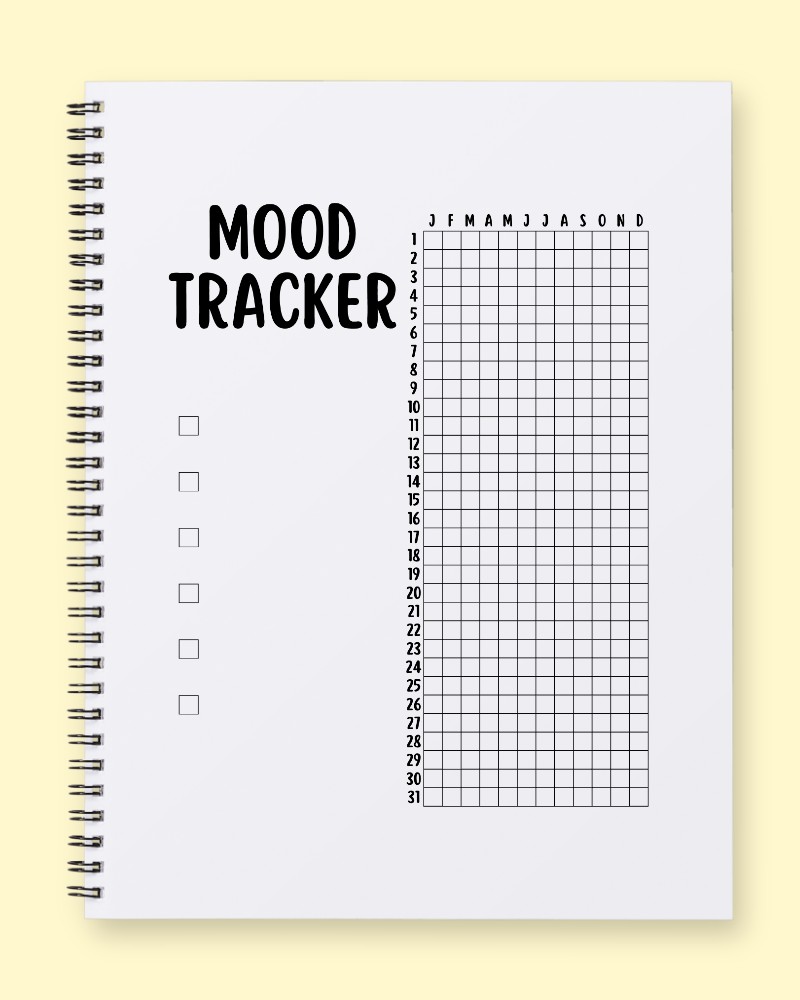
This elegantly designed mood tracker journal page offers a straightforward yet powerful tool for cultivating self-awareness and enhancing emotional well-being throughout the year. With its clear grid layout, spanning all 31 days and 12 months, and dedicated space for a customizable mood key, it’s an intuitive system for daily emotional logging. Beyond just tracking, this template is a catalyst for deeper self-understanding and proactive mental health management.
The Psychological Benefits of Using This Specific Tracker/Planner
The structured visual nature of this mood tracker provides profound psychological advantages that go beyond simple journaling. Firstly, the daily commitment to logging a mood fosters mindfulness. By pausing each day to assess and categorize your emotional state, you become more present and attuned to your inner landscape. This consistent check-in can reduce emotional suppression and increase emotional literacy.
Secondly, the grid layout, presenting an entire year at a glance, is incredibly effective for pattern recognition. Unlike disparate journal entries, this visual matrix allows you to effortlessly spot trends – seasonal affective patterns, weekly emotional cycles, or recurring responses to specific events or stressors. For instance, you might notice a dip in mood during particular months (JFMAMJJASOND) or consistently positive moods on weekends, offering actionable insights into your lifestyle and environment. This visual data empowers you to identify triggers, celebrate periods of consistent well-being, and anticipate challenges. The act of coloring in or marking a box each day provides a tangible sense of accomplishment, reinforcing positive self-care habits. Furthermore, the dedicated checkboxes on the left serve as a vital mood key legend, allowing for personalized emotional categories. This personalization ensures the tracker truly reflects your unique emotional spectrum, making the data more meaningful and relevant to your personal growth journey. By externalizing complex emotional data into a simple, color-coded visual, the tracker helps to depersonalize difficult feelings, making them seem more manageable and less overwhelming.
A Step-by-Step Guide on How to Fill It Out Effectively
Utilizing this mood tracker effectively is simple and rewarding:
-
Create Your Mood Key (Left Column Checkboxes): Before you begin, decide on 4-6 primary moods you want to track. These could be broad (e.g., Happy, Sad, Anxious, Productive, Calm, Stressed) or more specific to your experiences. Assign each mood a distinct color or a simple symbol. Write the mood next to each checkbox and color or draw the symbol within the box. This serves as your personal legend for the entire year. For example:
- ☐ Happy (Yellow)
- ☐ Calm (Light Blue)
- ☐ Anxious (Grey)
- ☐ Productive (Green)
- ☐ Stressed (Red)
- ☐ Sad (Dark Blue)
-
Daily Emotional Check-in: At the end of each day (or a consistent time that works for you), take a moment to reflect on your overall predominant mood. It doesn't have to be perfect; choose the feeling that best encapsulates the majority of your day or the most significant emotional experience.
-
Log Your Mood in the Grid: Locate the current day's row (1-31) and the current month's column (J-D). Using the color or symbol you assigned in your mood key, fill in the corresponding square in the grid. For example, if it's January 5th and you felt predominantly "Happy," you would color the box at the intersection of "5" and "J" with yellow.
-
Maintain Consistency: The power of this tracker lies in its consistency. Try to fill it out daily. Even if you miss a day, pick up where you left off. Don't let perfection be the enemy of progress.
-
Review and Reflect Periodically: Take time at the end of each week or month, and especially at the end of the year, to review your completed grid. Look for patterns, recurring themes, and correlations between your moods and life events. This reflection is where the true insights and benefits emerge.
Three Daily Prompts That Pair Well With This Layout
To deepen your understanding and maximize the utility of your mood tracker, consider pairing your daily mood entry with a brief reflection prompted by these questions:
- "What was the most significant event or thought that contributed to the mood I logged today?" This prompt encourages you to connect your emotional state to external circumstances or internal narratives, helping you identify potential triggers or sources of joy.
- "Even if my mood wasn't ideal, what is one small thing I'm grateful for or one positive moment I experienced today?" This helps shift focus towards gratitude and can prevent dwelling solely on negative emotions, fostering a balanced perspective even on challenging days.
- "Looking at my mood today, what is one small action I could take tomorrow to nurture a more positive or stable emotional state?" This prompt encourages proactive self-care and empowers you to actively influence your well-being, rather than passively observing your moods.
This mood tracker is more than just a planner page; it's an invitation to embark on a year-long journey of self-discovery, resilience, and emotional growth. Embrace it as your personal guide to a more mindful and emotionally intelligent life.
Explore Our Resources
Explore free printable planners, journals, and trackers to stay organized, build better habits, and simplify your daily routine. Practical tools and guides designed for real life.