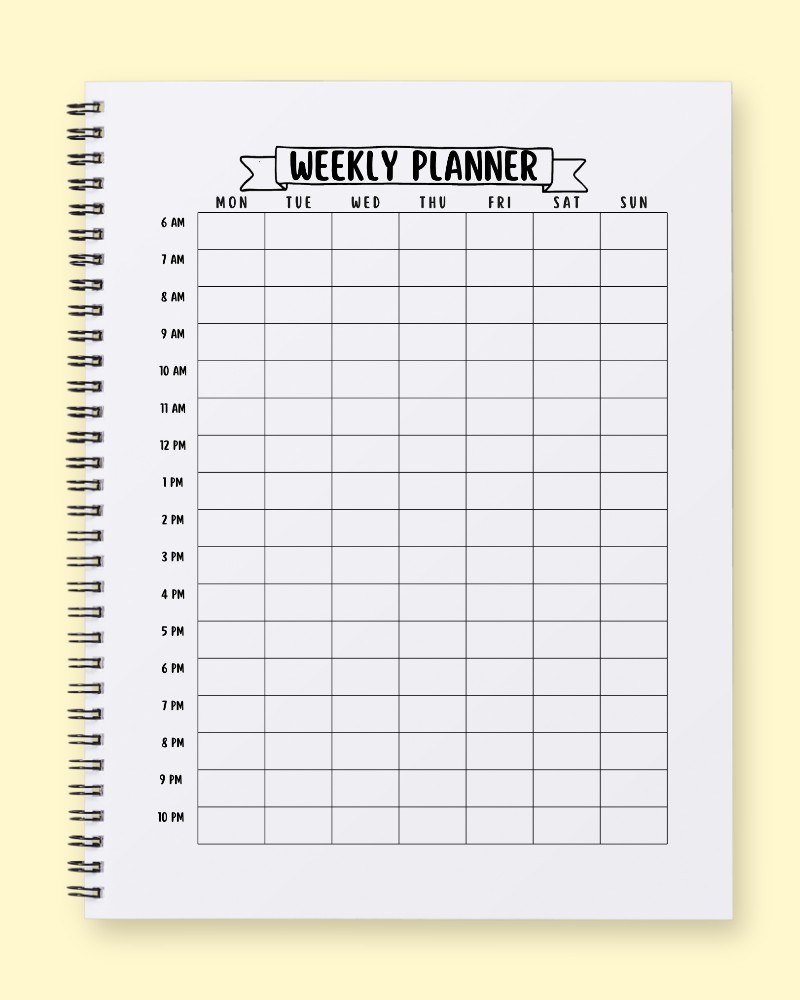
Unlock unparalleled productivity and mental clarity with the Ultimate Weekly Time-Block Planner, a meticulously designed template that transforms your weekly outlook into an actionable, hour-by-hour roadmap. This planner isn't just about listing tasks; it's a strategic tool engineered to help you master your time from 6 AM to 10 PM, across every day of your week, fostering better habits and reducing stress. Whether you're a student, a professional, or someone striving for better work-life integration, this printable weekly schedule template provides the structure you need for effective time management and sustained focus. Say goodbye to scattered thoughts and hello to an organized, purposeful week with this essential daily organizer.
1. The Psychological Benefits of Using This Specific Weekly Planner
The granular structure of this hourly weekly planner offers profound psychological advantages. By breaking down your entire week into explicit hourly slots from 6 AM to 10 PM, it inherently reduces decision fatigue and mental clutter. Visualizing your commitments for each day, Monday through Sunday, in such detail creates a tangible sense of control over your schedule. This time-blocking approach combats procrastination by assigning specific time windows to tasks, making them less daunting and more achievable. The act of physically writing down or digitally blocking out time for work, personal appointments, and even leisure activities fosters a proactive mindset, rather than a reactive one. This leads to significantly reduced stress and anxiety, as you gain clarity on how your time is spent and what lies ahead. Furthermore, seeing designated slots for breaks and self-care encourages better work-life balance, preventing burnout and promoting overall well-being. It provides a clear visual record for reflection, allowing you to easily identify patterns, optimize your energy levels, and make informed adjustments for future weekly schedules, promoting continuous personal growth and productivity.
2. A Step-by-Step Guide to Filling Out Your Hourly Schedule Effectively
Maximizing the potential of this weekly planner template is simple when approached strategically. Follow these steps to transform your blank grid into a powerful productivity tool:
- Block Fixed Commitments First: Begin by shading or writing in all non-negotiable appointments, meetings, classes, and regular commutes directly into their specific hourly slots, from 6 AM to 10 PM, across the entire week. Use a distinct color for easy identification (e.g., blue for work meetings, green for personal appointments). This forms the unmovable skeleton of your week.
- Allocate Core Responsibilities: Next, assign dedicated time blocks for your major work tasks, study sessions, exercise routines, and essential chores. For instance, if you have a project, break it into smaller components and assign specific 1-hour or 2-hour slots for focused work on those components. Be realistic about how long tasks actually take.
- Integrate Self-Care and Buffer Time: Crucially, schedule time for meals, breaks, relaxation, and personal hobbies. Don't overlook these! Designate 30-minute to 1-hour slots for lunch and dinner daily, and perhaps a "Mindfulness Break" in an afternoon slot. Also, consider leaving 15-30 minute buffer slots between major tasks to account for transitions or unexpected overruns.
- Prioritize Daily Tasks: At the start of each day, quickly review your schedule. Identify your top 1-3 priorities for the day and ensure they are clearly allocated in their respective hourly slots. If you find empty slots, use them for flexible tasks, responding to emails, or contingency work.
- Review and Adjust Weekly: At the end of each week, take 15-20 minutes to review your completed planner. What worked well? Where did you struggle to stick to the plan? Use these insights to refine your approach and make more accurate time allocations for your next weekly schedule. This iterative process is key to long-term success with time blocking.
3. Three Daily Prompts That Pair Well with This Layout
To further enhance your experience with this detailed hourly schedule template, integrate these specific prompts into your daily planning routine, leveraging the grid's visual structure:
- The "Priority Power Hour" Prompt: Each morning, before you start your day, identify the single most critical task you need to accomplish. Then, looking at your empty slots, commit one specific 60-minute block (e.g., "9 AM - 10 AM") to focused, uninterrupted work on only that task. Write "PPH: [Specific Task Name]" clearly in that hourly box. This leverages the time-blocking aspect to ensure your most important work gets dedicated attention early in the day.
- The "Hourly Gratitude & Reflection" Prompt: For one day a week (e.g., Sunday), as you fill out your schedule, consciously assign a small, empty corner of each hourly box from 6 AM to 10 PM to a brief reflection. At the end of that day, or during your weekly review, briefly note one thing you were grateful for during that hour, or one small learning. This transforms the functional planner into a mindfulness tool, helping you appreciate the small moments throughout your structured day.
- The "Evening Prep & Wind-Down" Prompt: Dedicate the 9 PM and 10 PM slots across all seven days to "Evening Routine" or "Tomorrow's Prep." Within those boxes, specifically list 1-2 wind-down activities (e.g., "Read book," "Stretch," "No Screens") and 1-2 prep tasks for the next day (e.g., "Pack bag for work," "Review next day's schedule"). This consistent, visually reinforced evening ritual ensures you end your day mindfully and start the next prepared, using the final hourly slots to establish positive habits for both relaxation and future readiness.
Explore Our Resources
Explore free printable planners, journals, and trackers to stay organized, build better habits, and simplify your daily routine. Practical tools and guides designed for real life.