50 Journal Prompts for Anxiety, Stress and Overwhelm
In this article
- Why journaling can actually help when you feel anxious
- A simpler way to think about journaling
- Category 1: Prompts for anxious thoughts and worst-case spirals
- Category 2: Prompts for overwhelm and mental clutter
- Category 3: Prompts for stress in your body
- Category 4: Prompts for emotional release
- Category 5: Prompts for comfort, perspective, and resilience
- How to use these prompts without making it feel like work
- What this can look like in real life
- When the Sunday Scaries hit
- When money anxiety sends you into a spiral
- When you feel burnt out in the middle of the day
- Final thought
- Sources
If your brain has ever felt like it has 27 tabs open at once, you are definitely not alone.
Maybe you are staring at your screen and cannot even figure out where to start. Maybe your chest feels tight, your thoughts are racing, and your to-do list is somehow making you feel worse instead of helping. Or maybe it is 3 AM, and your brain has decided now is the perfect time to replay every stressful thought it can find.
If that sounds familiar, nothing is wrong with you.
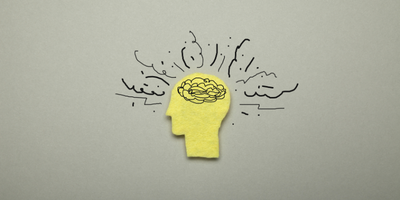
Your brain is not broken. It is overwhelmed.
And when you feel like that, the usual advice to “just journal” can sound almost annoying. Because when your nervous system is already overloaded, staring at a blank page can feel like one more thing you are supposed to do perfectly.
But journaling does not have to look like writing a beautiful diary entry or filling a page with deep thoughts in perfect handwriting.
Sometimes journaling is just a way to get the chaos out of your head and onto paper. Sometimes it is how you slow your thoughts down enough to actually breathe again. Sometimes it is just giving your brain somewhere else to put the spiral.
Why journaling can actually help when you feel anxious
A lot of people think journaling is just for reflection, but it can actually be a really helpful tool when you are stressed, overwhelmed, or stuck in your head.
Writing things down can help you:
- Put your feelings into words
- Get anxious thoughts out of your head
- Sort through what is real and what is fear
- Calm down enough to think more clearly
- Feel a little less mentally crowded
It is not about writing something impressive. It is about creating a little space between you and whatever is overwhelming you.
A simpler way to think about journaling
You do not need to journal for an hour. You do not need the perfect notebook. You do not need to write something deep or poetic.
You can keep it really simple:
- Take a few breaths first.
- Open a notebook, notes app, or whatever you have.
- Pick one prompt.
- Write for a few minutes without overthinking it.
That is enough. And if you are feeling especially anxious, it can help to choose prompts that give your mind a little structure instead of trying to “figure out what to write.”
That is where these prompts come in.
Category 1: Prompts for anxious thoughts and worst-case spirals
Use these when your brain is jumping straight to the worst possible outcome and you need something to help you slow it down.
- What is the exact thought making me anxious right now? Is it a fact or an assumption?
- What is the worst-case scenario I am imagining? If that happened, how would I realistically handle it?
- What is the most likely outcome, not the scariest one?
- When have I felt anxious like this before and gotten through it? What helped me then?
- If someone I love came to me with this exact fear, what would I say to them?
- What part of this situation is actually in my control?
- What part of this is not in my control?
- What are three other possible explanations for what is happening?
- What evidence do I have that this fear may not be true?
- How much will this matter in 5 days, 5 months, or 5 years?
Category 2: Prompts for overwhelm and mental clutter
Use these when your brain feels too full and you cannot think straight.
- Write down everything that is on my mind right now.
- Which three things on that list feel the heaviest or most urgent?
- What is one tiny task I can do right now to feel even a little more in motion?
- What can I let go of, delay, or stop expecting from myself today?
- I feel overwhelmed because…
- If I could only get one thing done today, what would help me feel most relieved?
- What boundaries do I need right now to protect my time or energy?
- What decisions have I been avoiding? What is the smallest next step for each one?
- What in my space is making me feel more mentally cluttered right now?
- What do I need on my “not doing this week” list?
Category 3: Prompts for stress in your body
Use these when your stress feels physical, not just mental.
- Where am I holding stress in my body right now?
- What does that tension feel like — tight, heavy, hot, shaky, sharp?
- What does my body need right now to feel even 10% better?
- Rate my current tension, breathing, and energy from 1 to 10.
- What are 5 things I can see, 4 I can feel, 3 I can hear, 2 I can smell, and 1 I can taste right now?
- If this physical tension could talk, what would it be trying to tell me?
- How have sleep, food, hydration, or stress affected how I feel today?
- What place — real or imagined — makes me feel safe and calm? Describe it.
- What movement would feel good right now? Stretching, standing up, walking, shaking out tension?
- What would I say to my body right now if I wanted to thank it and be kinder to it?
Category 4: Prompts for emotional release
Use these when you need to let yourself feel what you are actually feeling instead of pushing it down.
- What feeling am I trying not to feel right now?
- What happened recently that upset me more than I want to admit?
- What do I need to forgive myself for today?
- I feel exhausted by…
- What am I pretending is fine when it actually is not?
- If I could say everything I am frustrated about without filtering it, what would I say?
- What “shoulds” are making me feel worse right now?
- When was the last time I felt truly rested or okay? What was different then?
- It makes sense that I feel this way because…
- What part of my routine, life, or relationships is draining me the most right now?
Category 5: Prompts for comfort, perspective, and resilience
Use these when you want to feel a little steadier, more supported, or more hopeful.
- What would my future self say to me about this moment?
- What are five hard things I have already survived or worked through?
- What are three things that are still okay right now, even if they are small?
- Who can support me right now, and what could I ask them for?
- What is one small way I can be extra kind to myself today?
- What are a few simple things that always make me feel a little better?
- What does a peaceful, gentle day look like for me?
- I am more than my anxiety because I am also…
- What is this stressful season teaching me about what I need?
- What is one calming sentence or reminder I can come back to when I start spiraling?
How to use these prompts without making it feel like work
You do not need to use all 50. You do not even need to use 5. Just pick one that matches what you are feeling right now.
For example:
- If you are spiraling, go to the anxious-thought prompts.
- If your brain feels packed and scrambled, go to the overwhelm prompts.
- If your body feels tense or panicky, go to the body-awareness prompts.
- If you feel emotionally drained, go to the emotional-release prompts.
- If you need comfort or perspective, go to the resilience prompts.
That is it. You are not trying to write the perfect journal entry. You are just trying to help yourself feel a little less trapped inside your own head.
What this can look like in real life
When the Sunday Scaries hit
If Sunday night makes your brain go into full panic mode, start with the overwhelm prompts. Do a brain dump. Write down everything swirling around in your head. Then circle the top few things that actually matter first. That can take a huge amount of pressure off.
When money anxiety sends you into a spiral
If one bill, one balance, or one financial worry makes your brain jump to disaster mode, use the anxious-thought prompts. Slow the fear down. Write out what you are imagining, what is actually true, and how you would handle things if they got hard. That can help pull you out of panic and back into reality.
When you feel burnt out in the middle of the day
If your brain is fried and your body feels tense, do not force yourself into some deep journaling session. Pick one body-based prompt. Describe how you feel physically. Ask yourself what your body needs right now. That might be enough to help you reset.
Final thought
Journaling does not have to be deep, beautiful, or perfectly organized to help.
It can be messy. It can be short. It can be just a few sentences in the notes app on your phone while you are trying not to spiral in a parking lot.
What matters is that it gives your thoughts somewhere to go. Sometimes that is all you need — a page, a prompt, and a few honest minutes to get out of your head and back into your body.
Sources
- American Psychological Association (APA) - How journaling can help you heal: https://www.apa.org/monitor/2002/06/journaling
- Cambridge University Press - Emotional and physical health benefits of expressive writing (Dr. James W. Pennebaker): https://www.cambridge.org/core/journals/advances-in-psychiatric-treatment/article/emotional-and-physical-health-benefits-of-expressive-writing/ED2976A61F5DE56B46F07A1CEEBCEB68
- Harvard Health Publishing - Writing about emotions may ease stress and trauma: https://www.health.harvard.edu/healthbeat/writing-about-emotions-may-ease-stress-and-trauma
- National Library of Medicine (PubMed/UCLA) - Putting Feelings Into Words: Affect Labeling Disrupts Amygdala Activity in Response to Affective Stimuli (Lieberman et al.): https://pubmed.ncbi.nlm.nih.gov/17576282/
- PositivePsychology.com - 83 Benefits of Journaling for Depression, Anxiety, and Stress (Evidence-based frameworks for CBT journaling): https://positivepsychology.com/benefits-of-journaling/
- JMIR Mental Health - Web-Based Positive Emotion Skills Intervention for Managing Stress (Research on gratitude and cognitive reappraisal writing): https://mental.jmir.org/2018/4/e12271/

About the Author
Michelle is a certified productivity specialist and the creator of PixelDownloadables. With 12,600+ verified sales and over 1.1k reviews on the Etsy marketplace, she has dedicated years to helping individuals build better habits and achieve mental clarity through structured journaling.
Read Full Story