10 Beginner-Friendly Self-Care Ideas That Actually Fit Into Your Day

In this article
- What self-care actually means
- Why small self-care habits work
- 10 simple self-care ideas you can actually do
- 1. Wait a little before checking your phone
- 2. Drink water first thing
- 3. Get outside for a few minutes
- 4. Do a quick tidy of your space
- 5. Move a little during the day
- 6. Take a few deep breaths
- 7. Make saying “no” easier
- 8. Ground yourself when your mind is racing
- 9. Make a “done” list
- 10. Do a brain dump before bed
- How to make self-care easier to stick with
- What this can look like in real life
- On a stressful morning
- In the middle of a busy workday
- At the end of the day
- Final thought
- Sources
If you’ve ever felt like self-care is just one more thing to squeeze into an already overloaded day, you are definitely not alone.
A lot of self-care advice sounds nice in theory, but in real life, it can feel completely unrealistic. When your alarm is going off, your inbox is packed, your to-do list is nonstop, and you’re just trying to keep up, being told to take a long bubble bath or book a spa day can feel a little out of touch.
The truth is, most people do not need more complicated routines. They need small things that actually fit into real life.
That is where simple self-care comes in.
Self-care does not have to be big, expensive, or time-consuming to make a difference. Sometimes the most helpful habits are the ones that take just a few minutes and help you feel a little calmer, more grounded, or more taken care of in the middle of a busy day.
What self-care actually means
A lot of people think of self-care as something extra — something you do when you have a lot of free time. But real self-care is often much more practical than that.
It can look like:
- Drinking water before coffee
- Taking a few deep breaths when you feel stressed
- Getting up to stretch after sitting too long
- Putting your phone down for a few minutes
- Writing down what is on your mind before bed
It is not always glamorous, but it helps. The goal of self-care is not to escape your life. It is to support yourself while you are living it. And when you are busy, small habits usually work better than big ones because they are easier to repeat.
Why small self-care habits work
When a routine feels too long or too complicated, it is harder to stick with. That is why simple habits tend to work so well. They are easier to start, easier to keep up with, and easier to fit into a full day.
A few minutes here and there may not seem like much, but over time, those little moments can help you feel more steady, less stressed, and more like yourself.
The key is to stop thinking of self-care as a huge event and start thinking of it as small support built into your day.
10 simple self-care ideas you can actually do
You do not need to do all of these. Just pick a few that feel realistic for you.
1. Wait a little before checking your phone
Try giving yourself even 15 to 30 minutes in the morning before jumping into texts, emails, or social media. That small break can help you start the day feeling calmer instead of instantly overwhelmed.
2. Drink water first thing
Before coffee, before getting distracted, try drinking a glass of water when you wake up. It is simple, but it can help you feel more awake and less foggy first thing in the morning.
3. Get outside for a few minutes
Step outside in the morning if you can, even if it is just for a few minutes. Fresh air and sunlight can help wake you up, improve your mood, and make the day feel a little less heavy.
4. Do a quick tidy of your space
If your desk, kitchen counter, or room is stressing you out, spend two minutes resetting it. You do not need to deep clean. Just clearing a small area can make your environment feel calmer.
5. Move a little during the day
You do not need a full workout for movement to help. Try:
- Stretching for a minute
- Taking a short walk
- Doing a few squats
- Standing up after a long period of sitting
A little movement can give you a quick boost and help break up stress.
6. Take a few deep breaths
When your stress starts building, pause and breathe. One simple method is to take a couple of short inhales through your nose, then one long exhale through your mouth. Doing that a few times can help your body calm down surprisingly fast.
7. Make saying “no” easier
A lot of stress comes from saying yes when you really do not have the energy. You can make this easier by having a few simple responses ready, like:
- “I can’t take that on right now.”
- “I don’t have the bandwidth today.”
- “Thanks for thinking of me, but I need to pass.”
Setting boundaries is self-care too.
8. Ground yourself when your mind is racing
If you feel anxious or overstimulated, try bringing your attention back to what is around you. Notice:
- 5 things you can see
- 4 things you can touch
- 3 things you can hear
- 2 things you can smell
- 1 thing you can taste
It is a simple way to get out of your head and back into the present moment.
9. Make a “done” list
At the end of the day, instead of only focusing on what you did not finish, write down a few things you did do. This can help you feel more accomplished and less like the day just disappeared.
10. Do a brain dump before bed
If your mind gets busy at night, keep a notebook nearby and write down whatever is still in your head. Tasks, worries, reminders, ideas — just get them out. It can make it easier to relax and fall asleep.
How to make self-care easier to stick with
One of the best ways to make these habits work is to connect them to things you already do. For example:
- Drink water after turning off your alarm
- Stretch after a Zoom call
- Tidy your desk before starting work
- Write your done list before closing your laptop
- Do a brain dump right before bed
This makes self-care feel less like another task and more like part of your normal routine.
What this can look like in real life
On a stressful morning
Let’s say you have a big meeting or presentation. Instead of waking up and immediately checking your phone, you could:
- Drink a glass of water
- Step outside for a few minutes
- Avoid email for the first part of your morning
That alone can help you start the day feeling more steady.
In the middle of a busy workday
If you are feeling overwhelmed in the afternoon, you do not need a full reset. You could:
- Take a few deep breaths
- Stand up and stretch
- Use a boundary phrase instead of automatically saying yes to something extra
That is still self-care.
At the end of the day
If work and home life start blending together, create a small transition. You could:
- Close your laptop
- Write down a few things you finished
- Do a quick grounding exercise
- Leave tomorrow’s worries on paper instead of carrying them to bed
That helps your brain understand the workday is over.
Final thought
Self-care does not have to be a whole event. It does not have to be perfect, expensive, or time-consuming. For busy people, the best self-care is usually simple, practical, and easy to come back to.
A glass of water counts. A deep breath counts. A short walk counts. A boundary counts. Writing things down counts.
Small things still matter.
Sources
- American Psychological Association (APA). (2023). Stress in America 2023: A nation recovering from collective trauma. https://www.apa.org/news/press/releases/stress/2023/collective-trauma-recovery
- Balban, M. Y., Neri, E., Kogon, M. M., Weed, L., Nouriani, B., Jo, B., Holl, G., Zeitzer, J. M., Spiegel, D., & Huberman, A. D. (2023). Brief structured respiration practices enhance mood and reduce physiological arousal. Cell Reports Medicine, 4(1). https://doi.org/10.1016/j.xcrm.2022.100895
- Clear, J. (2018). Atomic Habits: An Easy & Proven Way to Build Good Habits & Break Bad Ones. Avery. (Reference for Habit Stacking methodology). https://jamesclear.com/habit-stacking
- Scullin, M. K., Krueger, M. L., Ballard, H. K., Pruett, N., & Bliwise, D. L. (2018). The effects of bedtime writing on difficulty falling asleep: A polysomnographic study comparing to-do lists and completed activity lists. Journal of Experimental Psychology: General, 147(1), 139–146. https://doi.org/10.1037/xge0000374
- Centers for Disease Control and Prevention (CDC). (2022). Sleep and Sleep Disorders. https://www.cdc.gov/sleep/index.html
- Harvard Medical School. (2020). Relaxation techniques: Breath control helps quell errant stress response. Harvard Health Publishing. https://www.health.harvard.edu/mind-and-mood/relaxation-techniques-breath-control-helps-quell-errant-stress-response
- Huberman Lab. (2021). Using Light (Sunlight, Blue Light & Red Light) to Optimize Health. Podcast Episode. https://hubermanlab.com/using-light-sunlight-blue-light-and-red-light-to-optimize-health/
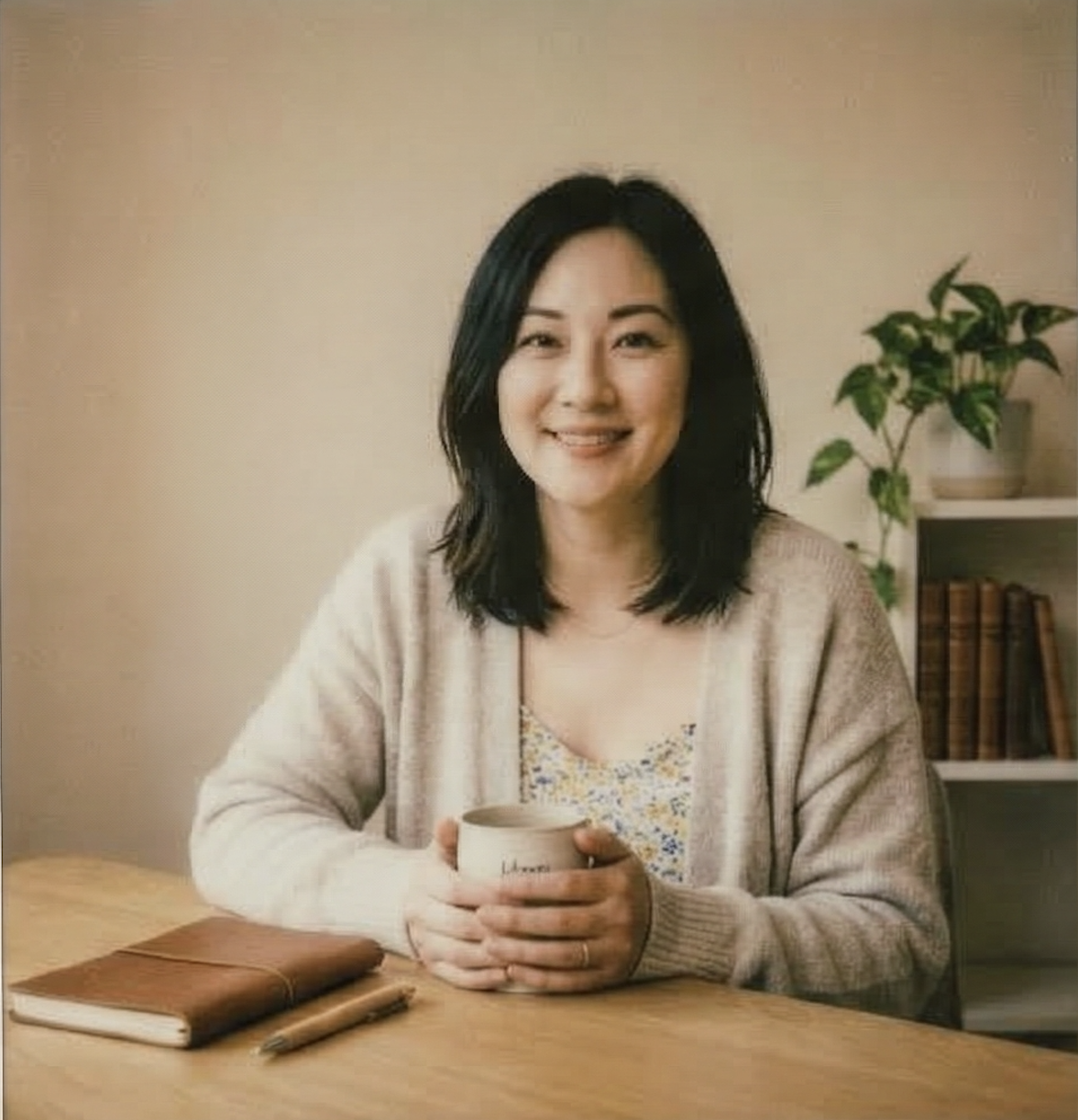
About the Author
Michelle is a certified productivity specialist and the creator of PixelDownloadables. With 12,600+ verified sales and over 1.1k reviews on the Etsy marketplace, she has dedicated years to helping individuals build better habits and achieve mental clarity through structured journaling.
Read Full Story