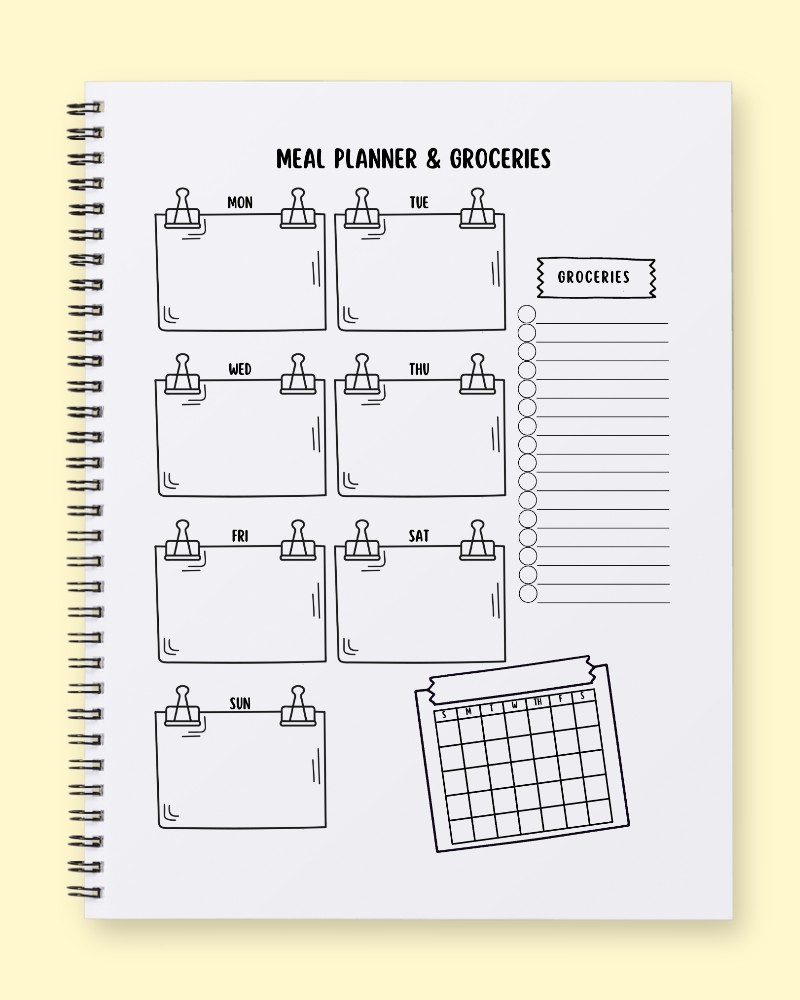
Unlock a more organized and stress-free approach to your kitchen and daily meals with this charming Doodle Meal & Grocery Planner template. Designed for both visual appeal and practical functionality, this planner isn't just a list-maker; it's a tool for cultivating healthier habits, reducing waste, and bringing a sense of calm to your weekly routine. Its unique, hand-drawn aesthetic makes meal planning feel less like a chore and more like a creative, enjoyable process. Whether you're aiming for budget-friendly eating, mindful nutrition, or simply less last-minute meal scramble, this weekly meal plan and grocery list combo is your perfect companion.
Psychological Benefits of Using This Specific Tracker
The distinctive visual elements of this Meal Planner & Groceries template offer unique psychological advantages:
- Reduced Decision Fatigue: The clear, separated "note" sections for each day (Mon-Sun), complete with their playful binder clips, visually segment your week. This encourages you to make food decisions once for the entire week, eliminating the daily grind of "what's for dinner?" It frees up mental energy for other tasks, creating a calmer mind.
- Enhanced Sense of Control and Accomplishment: Seeing your week's meals laid out in an organized, yet aesthetically pleasing, manner fosters a powerful sense of control over your nutrition and schedule. As you prepare meals and cross items off your dedicated "GROCERIES" list, you gain tangible evidence of your productivity and planning, boosting self-efficacy and satisfaction.
- Mindful Eating and Healthier Choices: The act of filling out each day's "note" prompts intentional food selection. Unlike generic lists, the doodle style and individual meal slots invite a more thoughtful approach, encouraging you to consider balanced meals and fresh ingredients rather than impulsive choices. This structured contemplation supports healthier eating habits and a deeper connection to what you consume.
- Creative Engagement and Reduced Stress: The hand-drawn aesthetic, from the wavy bottom lines on the daily notes to the playful grocery list border and mini calendar, makes planning feel less rigid and more like a personal project. This creative outlet can be therapeutic, turning a mundane task into an enjoyable ritual. The "binder clip" motif suggests flexibility—these are ideas "clipped" for the week, not immutable laws, which reduces pressure and stress.
- Budgeting and Waste Reduction Visualized: By planning meals and then directly deriving your grocery list from them, you create a clear visual link between what you eat and what you buy. This direct connection inherently promotes smarter shopping, helps prevent impulse purchases, and significantly reduces food waste, leading to financial savings that are both tangible and psychologically reassuring.
Step-by-Step Guide: Filling Out Your Planner Effectively
Leverage every unique feature of this planner for maximum benefit:
- Set Your Week with the Mini Calendar: Start by using the small, taped-on calendar in the bottom right corner. Circle the current week's dates or mark any special events (e.g., dinner plans out, guests, busy evenings) that will impact your meals. This initial overview helps set realistic expectations for your daily meal planning.
- Brainstorm & Sketch Meal Ideas: Before committing to a specific day, use a scratch pad or the empty spaces around the notes to brainstorm meal ideas. Consider what ingredients you already have, seasonal produce, or new recipes you want to try. The informal "note" design for each day encourages this fluid thinking.
- Populate Your Daily Meal Notes: Fill in each day's distinct "note" section (MON-SUN) with your planned meals. The blank space is versatile: you can dedicate it to dinner, or include breakfast, lunch, and snacks. The doodle lines on the notes provide a gentle guide for writing, or can be colored in for a playful touch. The "binder clips" serve as a mental reminder that these plans are held in place but can be adjusted if life happens.
- Build Your "GROCERIES" List: As you finalize each day's meal, immediately add all necessary ingredients to the dedicated "GROCERIES" section. The bulleted lines are perfect for individual items, and the playful wavy border makes this essential list feel less like a chore. Categorize items visually as you list them (e.g., dairy, produce, pantry) if it helps your shopping flow.
- Review, Refine, and Replicate: Once your notes and grocery list are complete, review everything. Check your fridge and pantry against your grocery list to avoid buying duplicates. Ensure your meal plan aligns with your schedule and energy levels for the week. The simplicity of the layout makes it easy to quickly scan and make adjustments before your shopping trip.
- Enjoy and Reflect: Execute your plan! As you shop, check off items on your grocery list. As you cook and eat, mentally or physically acknowledge your planned meals. Use the end of the week to reflect on what worked well and what you might change for next time, using the planner as a personal learning tool.
Three Daily Prompts That Pair Well with This Layout
These prompts are designed to enhance your experience with the unique features of this meal planner:
- Pre-Planning Prompt (Sunday/Monday): "Looking at my seven daily 'notes,' what existing pantry staples or leftovers can I incorporate into at least two meals this week to reduce food waste and save money? How can I creatively build a meal around them?" (This prompt specifically uses the visual separation of the daily notes to encourage resourceful planning before even touching the grocery list, connecting directly to the "waste reduction" benefit.)
- Mid-Week Check-in Prompt (Wednesday/Thursday): "Reviewing the meals I've planned (and eaten) so far for Monday, Tuesday, and Wednesday, how has my energy and mood been affected? If needed, what small, mindful adjustment can I make to Thursday, Friday, or Saturday's 'note' to better support my well-being for the rest of the week?" (This prompt encourages dynamic reflection specific to the daily note layout, allowing for real-time adjustments based on personal experience rather than rigid adherence, leveraging the flexible "clipped notes" feel.)
- Post-Week Reflection & Future Planning Prompt (Saturday/Sunday): "Comparing my completed grocery list and the meals noted for the past week, what was the most surprising or delightful ingredient I purchased, and which meal from any of the seven notes was my absolute favorite? How can I ensure I prioritize bringing more joy or novelty into next week's meal plan using the mini calendar to plan a special date?" (This prompt encourages positive reflection on both the shopping and eating experience, tying the practical grocery list to the emotional aspect of meals, and using the future-oriented mini calendar for forward planning of enjoyable food experiences.)
Explore Our Resources
Explore free printable planners, journals, and trackers to stay organized, build better habits, and simplify your daily routine. Practical tools and guides designed for real life.